Building REST APIs in Go: Complete Guide
Build production-ready REST APIs with Go's robust ecosystem
Building high-performance REST APIs with Go has become a standard approach for powering systems at Google, Uber, Dropbox, and countless startups.
Build production-ready REST APIs with Go's robust ecosystem
Building high-performance REST APIs with Go has become a standard approach for powering systems at Google, Uber, Dropbox, and countless startups.
Go testing from basics to advanced patterns
Go’s built-in testing package provides a powerful, minimalist framework for writing unit tests without external dependencies. Here are the testing fundamentals, project structure, and advanced patterns to build reliable Go applications.
Build maintainable Python apps with SOLID design patterns
Clean Architecture has revolutionized how developers build scalable, maintainable applications by emphasizing separation of concerns and dependency management.
Privacy-preserving systems with zero-knowledge proofs
Zero-knowledge architecture represents a paradigm shift in how we design privacy-preserving systems.
Type-safe reusable code with Go generics
Generics in Go represent one of the most significant language features added since Go 1.0. Introduced in Go 1.18, generics enable you to write type-safe, reusable code that works with multiple types without sacrificing performance or code clarity.
Complete guide to multi-tenancy database patterns
Multi-tenancy is a fundamental architectural pattern for SaaS applications, allowing multiple customers (tenants) to share the same application infrastructure while maintaining data isolation.
Optimize frontend APIs with GraphQL BFF and Apollo Server
The Backend for Frontend (BFF) pattern combined with GraphQL and Apollo Server creates a powerful architecture for modern web applications.
Python testing with pytest, TDD, mocking, and coverage
Unit testing ensures your Python code works correctly and continues to work as your project evolves. This comprehensive guide covers everything you need to know about unit testing in Python, from basic concepts to advanced techniques.
Build MCP servers for AI assistants with Python examples
The Model Context Protocol (MCP) is revolutionizing how AI assistants interact with external data sources and tools. In this guide, we’ll explore how to build MCP servers in Python, with examples focused on web search and scraping capabilities.
Ubuntu keyboard shortcuts -> your productivity
Ubuntu’s keyboard shortcuts are essential tools for maximizing productivity and efficiency. Whether you’re a developer, sysadmin, or power user, these shortcuts might speed up your workflow and reduce reliance on the mouse.
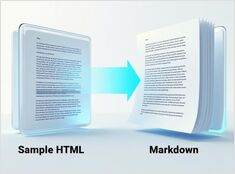
Python for converting HTML to clean, LLM-ready Markdown
Converting HTML to Markdown is a fundamental task in modern development workflows, particularly when preparing web content for Large Language Models (LLMs), documentation systems, or static site generators like Hugo.
Multipass installation, setup, and essential commands
Multipass is a lightweight virtual machine manager that makes it easy to create and manage Ubuntu cloud instances on Linux, Windows, and macOS.
Create consistent, portable, and reproducible development environments using Dev Containers
Developers often face the “works on my machine” dilemma due to dependency mismatches, tool versions, or OS differences. Dev Containers in Visual Studio Code (VS Code) solve this elegantly — by letting you develop inside a containerized environment configured specifically for your project.
Integrate Ollama with Go: SDK guide, examples, and production best practices.
This guide provides a comprehensive overview of available Go SDKs for Ollama and compares their feature sets.
How to manage state in Flutter
In this article, we’ll explore six popular ways of managing state in Flutter apps, including real examples and best practices:
Step-by-step example
Here we have a Python Lambda example of SQS Message Processor + REST API with API Key Protection + Terraform script to deploy it for serverless execution.