
Polling Agents in AI Assistants: 11 Implementation Patterns
Reliable polling patterns for AI agents.
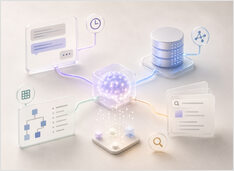
Polling agents are one of the least glamorous parts of AI assistant architecture, but they are also one of the most useful.
Reliable polling patterns for AI agents.
Polling agents are one of the least glamorous parts of AI assistant architecture, but they are also one of the most useful.
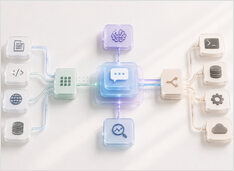
MCP gives agents tools. A2A gives agents peers.
AI agent architecture is starting to split into two layers.
A2A turns agents into network peers.
The A2A Protocol, short for Agent2Agent Protocol, is an open standard for communication between independent AI agent systems.
Working, structured, and retrieval memory for assistants.
Memory turns assistants from reactive to persistent, but it is also where many systems quietly rot. Surveys argue the short-term versus long-term split is no longer enough for modern agent memory; OpenAI and LangGraph SDKs point to a simpler stack — working memory, durable state, and retrieval.
How serious assistants are actually built.
A production AI assistant is not “an LLM with a prompt”. It is a system that accepts intent, keeps state, decides when to retrieve or act, and exposes enough runtime detail to debug failures.
Stars, tokens, downloads — who actually wins?
Open-source AI agent frameworks are exploding in popularity on GitHub. Two projects at the core of the self-hosted AI systems ecosystem — OpenClaw and Hermes Agent — have pulled so far ahead that the rest of the field is fighting for a distant third place.
Agentic LLM tuning reference
This page is a practical reference for agentic LLM inference tuning (temperature, top_p, top_k, penalties, and how they interact in multi-step and tool-heavy workflows).
Run OpenClaw safely with NemoClaw
Most AI agent stacks still treat security as a post-demo fix. NemoClaw starts from the opposite assumption and makes isolation, policy, and routing day-zero defaults.
Eight pluggable backends for persistent agent memory.
Modern assistants still forget everything when you close the tab unless something persists beyond the context window. Agent memory providers are services or libraries that hold facts and summaries across sessions — often wired in as plugins so the framework stays thin while memory scales.
The skills worth keeping, and the ones to skip
OpenClaw has two extension stories, and they are easy to mix up.
Plugins extend the runtime. Skills extend the agent’s behavior.
Plugins first. Skills naming in brief.
This article is about OpenClaw plugins — native gateway packages that add channels, model providers, tools, speech, memory, media, web search, and other runtime surfaces.
How real OpenClaw systems are actually structured
OpenClaw looks simple in demos. In production, it becomes a system.
Most local AI setups start with a model and a runtime.
Install OpenClaw locally with Ollama
OpenClaw is a self-hosted AI assistant designed to run with local LLM runtimes like Ollama or with cloud-based models such as Claude Sonnet.
OpenClaw AI Assistant Guide
Most local AI setups start the same way: a model, a runtime, and a chat interface.