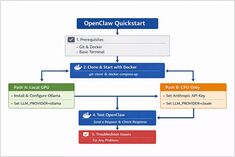
OpenClaw Quickstart: Install with Docker (Ollama GPU or Claude + CPU)
Install OpenClaw locally with Ollama
OpenClaw is a self-hosted AI assistant designed to run with local LLM runtimes like Ollama or with cloud-based models such as Claude Sonnet.
Install OpenClaw locally with Ollama
OpenClaw is a self-hosted AI assistant designed to run with local LLM runtimes like Ollama or with cloud-based models such as Claude Sonnet.
January 2026 trending Go repos
The Go ecosystem continues to thrive with innovative projects spanning AI tooling, self-hosted applications, and developer infrastructure. This overview analyzes the top trending Go repositories on GitHub this month.
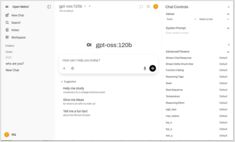
Self-hosted ChatGPT alternative for local LLMs
Open WebUI is a powerful, extensible, and feature-rich self-hosted web interface for interacting with large language models.
Fast LLM inference with OpenAI API
vLLM is a high-throughput, memory-efficient inference and serving engine for Large Language Models (LLMs) developed by UC Berkeley’s Sky Computing Lab.
Testing Cognee with local LLMs - real results
Cognee is a Python framework for building knowledge graphs from documents using LLMs. But does it work with self-hosted models?
Related guides for persistent knowledge layers — agent memory plugins, graph tooling, and stack context — live under the AI Systems Memory hub.
Compare the best local LLM hosting tools in 2026. API maturity, hardware support, tool calling, and real-world use cases.
Running LLMs locally is now practical for developers, startups, and even enterprise teams.
But choosing the right tool — Ollama, vLLM, LM Studio, LocalAI or others — depends on your goals:
Master Go code quality with linters and automation
Modern Go development demands rigorous code quality standards. Linters for Go automate the detection of bugs, security vulnerabilities, and style inconsistencies before they reach production.
Build robust AI/ML pipelines with Go microservices
As AI and ML workloads become increasingly complex, the need for robust orchestration systems has become greater. Go’s simplicity, performance, and concurrency makes it an ideal choice for building the orchestration layer of ML pipelines, even when the models themselves are written in Python.
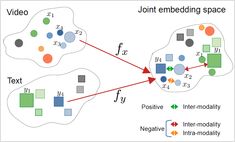
Unify text, images, and audio in shared embedding spaces
Cross-modal embeddings represent a breakthrough in artificial intelligence, enabling understanding and reasoning across different data types within a unified representation space.
Deploy enterprise AI on budget hardware with open models
The democratization of AI is here. With open-source LLMs like Llama, Mistral, and Qwen now rivaling proprietary models, teams can build powerful AI infrastructure using consumer hardware - slashing costs while maintaining complete control over data privacy and deployment.
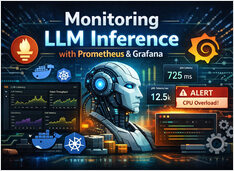
Set up robust infrastructure monitoring with Prometheus
Prometheus has become the de facto standard for monitoring cloud-native applications and infrastructure, offering metrics collection, querying, and integration with visualization tools.
Build production-ready REST APIs with Go's robust ecosystem
Building high-performance REST APIs with Go has become a standard approach for powering systems at Google, Uber, Dropbox, and countless startups.
Master Grafana setup for monitoring & visualization
Grafana is the leading open-source platform for monitoring and observability, transforming metrics, logs, and traces into actionable insights through stunning visualizations.
Kubernetes deployments with Helm package management
Helm has revolutionized Kubernetes application deployment by introducing package management concepts familiar from traditional operating systems.
Master Linux environment setup for data science work
Linux has become the de facto operating system for data science professionals, offering unmatched flexibility, performance, and a rich ecosystem of tools.
Configure context sizes in Docker Model Runner with workarounds
Configuring context sizes in Docker Model Runner is more complex than it should be.