
Observability in Production: Monitoring, Metrics, Prometheus & Grafana Guide (2026)
Metrics, dashboards, logs, and alerting for production systems — Prometheus, Grafana, Kubernetes, and AI workloads.
Observability is the foundation of reliable production systems.
Without metrics, dashboards, and alerting, Kubernetes clusters drift, AI workloads fail silently, and latency regressions go unnoticed until users complain.
If you are running:
- Kubernetes clusters
- AI and LLM inference workloads
- GPU infrastructure
- APIs and microservices
- Cloud-native systems
You need more than unstructured logs you can only grep.
You need production-grade monitoring, alerting, and system visibility — metrics, dashboards, and (where it fits) structured logs and traces.
This pillar connects concepts to concrete guides: Prometheus and Grafana, application logging in Go, Kubernetes and GPU visibility, and observability patterns for AI and LLM workloads.
What This Guide Covers
This observability pillar connects foundational monitoring concepts with real-world production implementation:
- Prometheus metrics architecture
- Grafana dashboards and alerting
- Structured logging in Go with log/slog (JSON logs, correlation, alerting-friendly events)
- Kubernetes observability patterns
- GPU and hardware monitoring
- Observability for AI and LLM systems
- Practical LLM monitoring examples
Start with the fundamentals below, then follow the links for deep dives.
What Is Observability?
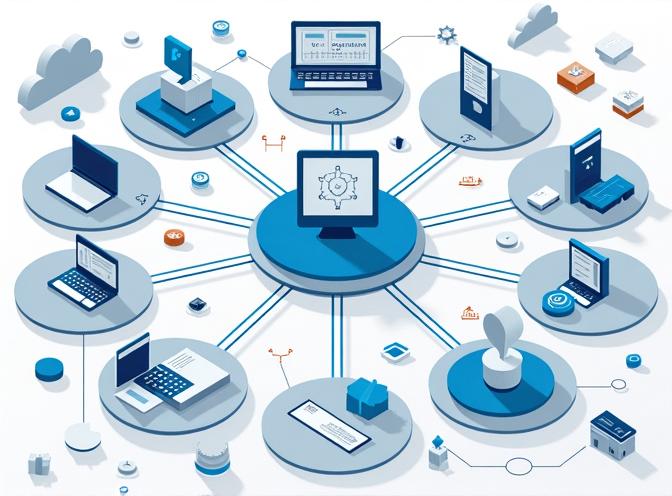
Observability is the ability to understand the internal state of a system using external outputs.
In modern systems, observability consists of:
- Metrics – quantitative time-series data
- Logs – discrete event records
- Traces – distributed request flows
Monitoring is a subset of observability.
Monitoring tells you something is wrong.
Observability helps you understand why.
In production systems — especially distributed systems — this distinction matters.
Monitoring vs Observability
Many teams confuse monitoring and observability.
| Monitoring | Observability |
|---|---|
| Alerts when thresholds are crossed | Enables root cause analysis |
| Focused on predefined metrics | Designed for unknown failure modes |
| Reactive | Diagnostic |
Prometheus is a monitoring system.
Grafana is a visualization layer.
Together, they form the backbone of many observability stacks.
Prometheus Monitoring
Prometheus is the de facto standard for metrics collection in cloud-native systems.
Prometheus provides:
- Pull-based metrics scraping
- Time-series storage
- PromQL querying
- Alertmanager integration
- Service discovery for Kubernetes
If you are running Kubernetes, microservices, or AI workloads, Prometheus is likely already part of your stack.
Start here:
Prometheus monitoring: setup & best practices
This guide covers:
- Prometheus architecture
- Installing Prometheus
- Configuring scrape targets
- Writing PromQL queries
- Setting up alert rules
- Production considerations
Prometheus is simple to start with — but subtle to operate at scale.
Grafana Dashboards
Grafana is the visualization layer for Prometheus and other data sources.
Grafana enables:
- Real-time dashboards
- Alert visualization
- Multi-datasource integration
- Team-level observability views
Getting started:
Install and use Grafana on Ubuntu (complete guide)
Grafana transforms raw metrics into operational insight.
Without dashboards, metrics are just numbers.
Structured logging in Go
Metrics and dashboards help only when the signals you emit are consistent and machine-readable. Plain text logs fall apart as soon as you need reliable filters, aggregations, joins to traces, or log-derived alert rules.
For Go services, log/slog (stable since Go 1.21) models records with time, level, message, and attributes; JSONHandler gives one queryable event per line; handlers are the right place for redaction and schema tweaks; and stable fields such as request_id, trace_id, and span_id connect logs to the rest of the observability stack.
Start here:
Structured Logging in Go with slog for Observability and Alerting
That guide walks through production-oriented setup, schema and cardinality discipline, OpenTelemetry-aligned correlation, and using structured events as inputs to monitoring and alerting.
How Prometheus and Grafana Work Together
Prometheus collects and stores metrics.
Grafana queries Prometheus using PromQL and visualizes the results.
In production:
- Prometheus handles ingestion and alert evaluation
- Alertmanager routes alerts
- Grafana provides dashboards and alert views
- Logs and traces are added for deeper diagnosis
If you’re new to observability, read in this order:
- Prometheus (metrics foundation)
- Grafana (visualization layer)
- Structured logging in Go with slog (when your stack includes Go services shipping JSON logs to Loki, Elasticsearch, or similar backends)
- Kubernetes monitoring patterns
- Observability for LLM Systems
For a hands-on example applied to LLM inference workloads, see Monitor LLM Inference in Production.
Observability in Kubernetes
Kubernetes without observability is operational guesswork.
Prometheus integrates deeply with Kubernetes through:
- Service discovery
- Pod-level metrics
- Node exporters
- kube-state-metrics
Observability patterns for Kubernetes include:
- Monitoring resource usage (CPU, memory, GPU). For node-level GPU visibility and debugging tools (nvidia-smi, nvtop, nvitop, KDE Plasma System Monitor), see GPU monitoring applications in Linux / Ubuntu.
- Alerting on pod restarts
- Tracking deployment health
- Measuring request latency
Prometheus + Grafana remains the most common Kubernetes monitoring stack.
Observability for AI & LLM Systems
Traditional API monitoring is not enough for LLM workloads.
LLM systems fail in different ways:
- Queues silently fill
- GPU memory saturates before CPU spikes
- Time-to-first-token degrades before total latency explodes
- Token throughput collapses while request rate looks stable
If you are running inference servers like Triton, vLLM, or TGI, you must monitor:
- Time-to-first-token (TTFT)
- End-to-end latency percentiles
- Token throughput (input/output)
- Queue depth and batching behavior
- GPU utilization and GPU memory pressure
- Retrieval and tool-call latency
- Cost per request (token-driven economics)
For a practical, hands-on guide using Prometheus and Grafana dashboards, see Monitor LLM Inference in Production.
Deep dive here: Observability for LLM Systems: Metrics, Traces, Logs, and Testing in Production
This guide covers:
- Prometheus metrics for LLM inference
- OpenTelemetry GenAI semantic conventions
- Tracing with Jaeger and Tempo
- GPU monitoring with DCGM exporter
- Loki / ELK log architecture
- Profiling and synthetic testing
- SLO design for LLM systems
- Full tools comparison (Prometheus, Grafana, OTel, APM platforms)
If you are deploying LLM infrastructure in production, read this guide.
Metrics vs Logs vs Traces
Metrics are ideal for:
- Alerting
- Performance trends
- Capacity planning
Logs are ideal for:
- Event debugging
- Error diagnosis
- Audit trails
Traces are ideal for:
- Distributed request analysis
- Microservice latency breakdown
A mature observability architecture combines all three.
Prometheus focuses on metrics.
Grafana visualizes metrics and often serves as the front door to log backends (for example Loki) alongside Prometheus.
For emitting structured, queryable application logs from Go before they hit your log pipeline, see the Structured logging in Go section above.
On this site, Observability for LLM Systems already walks through metrics, traces, and log architecture for inference stacks. Additional focused guides may follow for OpenTelemetry setup, trace analysis, and log aggregation patterns outside the LLM context.
Common Monitoring Mistakes
Many teams implement monitoring incorrectly.
Common mistakes include:
- No alert threshold tuning
- Too many alerts (alert fatigue)
- No dashboards for key services
- No monitoring for background jobs
- Ignoring latency percentiles
- Not monitoring GPU workloads
Observability is not just installing Prometheus.
It is designing a system visibility strategy.
Production Observability Best Practices
If you are building production systems:
- Monitor latency percentiles, not averages
- Track error rates and saturation
- Monitor infrastructure and application metrics
- Set actionable alerts
- Regularly review dashboards
- Monitor cost-related metrics
Observability should evolve with your system.
How Observability Connects to Other IT Aspects
Observability is tightly connected to Kubernetes operations, cloud infrastructure, AI inference, performance benchmarking, and hardware utilization. It is the operational backbone of production systems you intend to run for months or years, not only demo clusters.
Guides in this cluster
| Guide | What you get |
|---|---|
| Prometheus monitoring | Scraping, PromQL, alerts, production notes |
| Grafana on Ubuntu | Install, datasources, dashboards |
| Structured logging in Go (slog) | JSON logs, correlation, redaction, log-based signals |
| GPU monitoring on Linux / Ubuntu | nvidia-smi, nvtop, nvitop, desktop tools |
| Monitor LLM inference | Prometheus + Grafana applied to inference |
| Observability for LLM systems | Metrics, traces, logs, GPU, SLOs, tooling comparison |
Final Thoughts
Prometheus and Grafana are not disposable accessories; they are part of how modern teams answer “is the system healthy?” and “what broke?” in production.
If you cannot measure your system, you cannot improve it reliably.
Use the reading order under How Prometheus and Grafana Work Together if you are new to the stack, then pick guides from the table above for your workload (Kubernetes, GPU, Go services, or LLM inference).
