
Dependency Injection in Go: Patterns & Best Practices
Master DI patterns for testable Go code
Dependency injection (DI) is a fundamental design pattern that promotes clean, testable, and maintainable code in Go applications.
Master DI patterns for testable Go code
Dependency injection (DI) is a fundamental design pattern that promotes clean, testable, and maintainable code in Go applications.
Speed up Go tests with parallel execution
Table-driven tests are the idiomatic Go approach for testing multiple scenarios efficiently.
When combined with parallel execution using t.Parallel(), you can dramatically reduce test suite runtime, especially for I/O-bound operations.
Master line ending conversions across platforms
Line ending inconsistencies between Windows and Linux systems cause formatting issues, Git warnings, and script failures. This comprehensive guide covers detection, conversion, and prevention strategies.
Transform LaTeX documents to Markdown efficiently
Converting LaTeX documents to Markdown has become essential for modern publishing workflows, integrating static site generators, documentation platforms, and version control systems while maintaining readability and simplicity.
Deploy enterprise AI on budget hardware with open models
The democratization of AI is here. With open-source LLMs like Llama 3, Mixtral, and Qwen now rivaling proprietary models, teams can build powerful AI infrastructure using consumer hardware - slashing costs while maintaining complete control over data privacy and deployment.
Protect your privacy with advanced anti-fingerprinting
In the modern web, your digital identity can be tracked without cookies or explicit consent through sophisticated ditital fingerprinting techniques.
Set up robust infrastructure monitoring with Prometheus
Prometheus has become the de facto standard for monitoring cloud-native applications and infrastructure, offering metrics collection, querying, and integration with visualization tools.
Cross-distro apps with Flatpak & Flathub
Flatpak is a next-generation technology for building and distributing desktop applications on Linux, offering universal packaging, sandboxing, and seamless cross-distribution compatibility.
Universal Linux packages with Snap manager
Snap is Canonical’s revolutionary universal package management system that brings containerized applications, automatic updates, and enhanced security to Ubuntu and other Linux distributions.
Essential APT & dpkg commands for Ubuntu packages
Ubuntu’s package management system is the backbone of software installation and maintenance, making it essential knowledge for any Linux user or system administrator.
Speed-up FLUX.1-dev with GGUF quantization
FLUX.1-dev is a powerful text-to-image model that produces stunning results, but its 24GB+ memory requirement makes it challenging to run on many systems. GGUF quantization of FLUX.1-dev offers a solution, reducing memory usage by approximately 50% while maintaining excellent image quality.
Configure context sizes in Docker Model Runner with workarounds
Configuring context sizes in Docker Model Runner is more complex than it should be.
Enable GPU acceleration for Docker Model Runner with NVIDIA CUDA support
Docker Model Runner is Docker’s official tool for running AI models locally, but enabling NVidia GPU acceleration in Docker Model Runner requires specific configuration.
Optimize developing and running Hugo sites
Hugo caching strategies are essential for maximizing the performance of your static site generator. While Hugo generates static files that are inherently fast, implementing proper caching at multiple layers can dramatically improve build times, reduce server load, and enhance user experience.
Type-safe reusable code with Go generics
Generics in Go represent one of the most significant language features added since Go 1.0. Introduced in Go 1.18, generics enable you to write type-safe, reusable code that works with multiple types without sacrificing performance or code clarity.
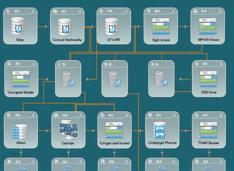
Complete guide to multi-tenancy database patterns
Multi-tenancy is a fundamental architectural pattern for SaaS applications, allowing multiple customers (tenants) to share the same application infrastructure while maintaining data isolation.